Mazes for Kids: How We Built Maze Trails
A plain maze always has exactly one way through. Make it harder and that promise breaks: the last maze in our new book started out with 3,242.
Mazes come first
Before a child can do a sudoku or a crossword, they can do a maze. It needs no numbers and no letters, only a pencil and a finger to trace the way, which is why a maze is the first puzzle most children meet and, I'd argue, the fairest one: either you got out or you didn't.
I grew up in Mysuru in the 1990s, when puzzles came on paper and nobody I knew had the internet. Paper is still where I think a child's first puzzles belong. So when we planned the next two books in our Puzzles for Kids series, a maze book was the obvious choice.
It was not the easy one.
The first draft was too easy
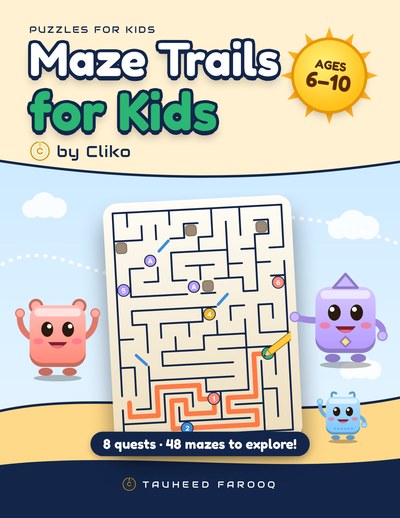
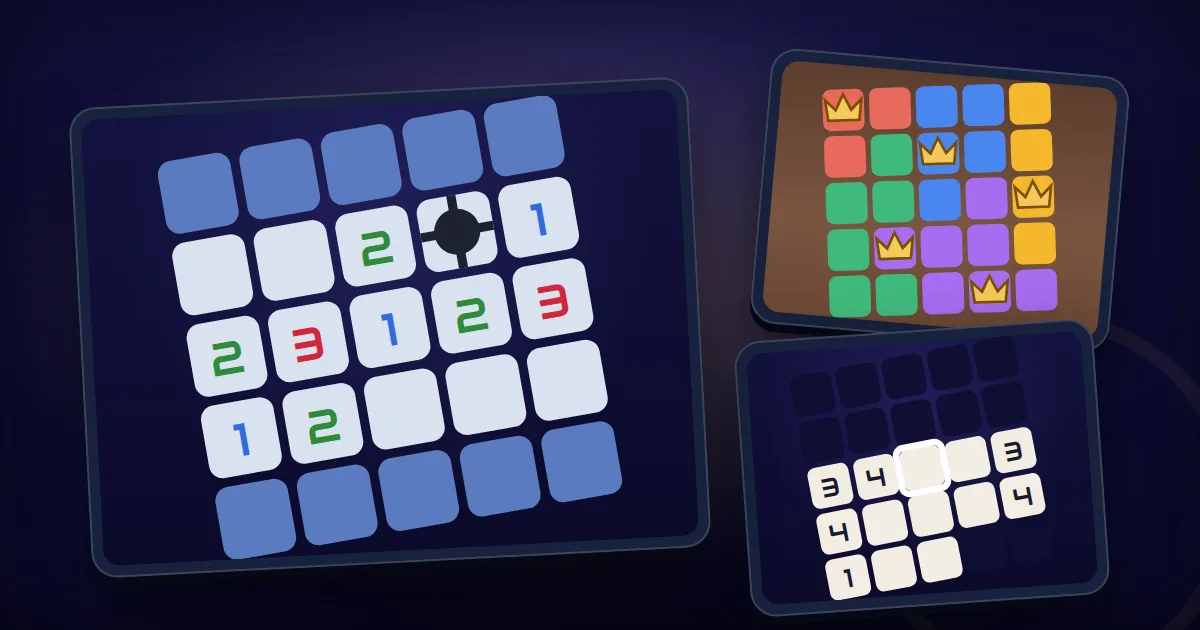
The first version was 48 plain mazes, tidy and correct, and a seven-year-old would have finished the whole book in a weekend. I asked for more: bigger mazes, with numbered checkpoints you pass in order like the ones in Weave Zap, and obstacles like the mirrors and portals in Mirror Maze.
The next draft got that wrong: it turned the numbers into number trails, a different puzzle from the one I had asked for, and that whole draft went in the bin. The third version is the book.
Then I asked for one more change, at the beginning, because bigger and harder was right for the end of the book, but a child who opens it to a giant maze full of mirrors closes it again. So the first quest went back to plain mazes, and every quest after it adds one new idea.
Why a plain maze is easy to get right
A computer builds a plain maze the way a tree grows. It starts in one square and knocks down a wall into a neighbouring square it has never visited, then does the same from there, backing up whenever it gets stuck, until it has reached every square. It never breaks through into a square it has already visited, so no path can loop back on itself. Programmers call this a depth-first search, and it is one of the oldest recipes for generating a maze.
That gives a plain maze a useful property: between any two squares there is exactly one way through, so a plain maze cannot possibly have two answers, however large it grows.
But a maze with no loops is also a maze with no real choices. Every dead end is just a dead end.
The trouble with harder mazes
To make a maze harder, you knock out a few extra walls. Now the paths loop, and a child has real decisions to make, which is the whole point. The cost is that the maze no longer has one answer; depending on its size, it may have dozens of different solutions, or thousands.
Take the last maze in the book, Quest 8, maze 6, "Over the finish line", which is 16 squares wide and 22 tall. With its walls, mirrors and portals in place but nothing else, our checker found 3,242 different ways from START to FINISH. Add the rocks and that drops to 33; add the six numbers, which have to be passed in order, and it drops to one.
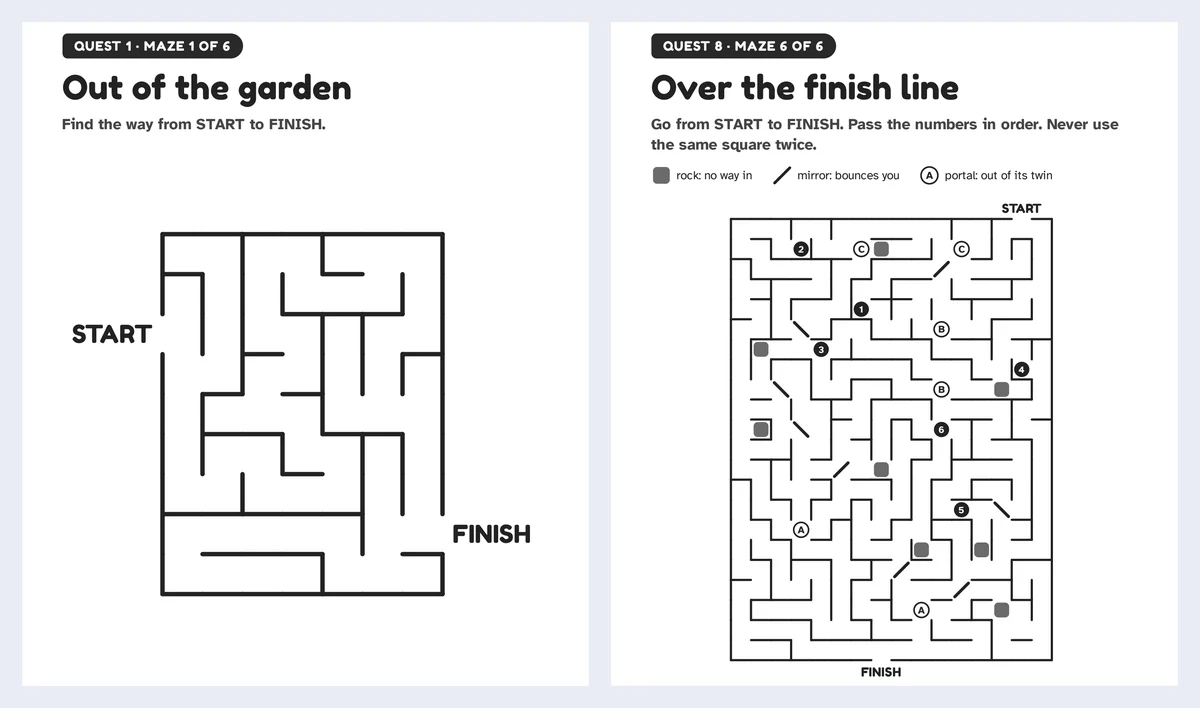
Every maze in the book was made the same way. The program picks the long, winding route it wants a child to find, then asks the checker whether any other route obeys the rules. If one does, it drops a rock on the shortcut or puts another number on the real route, and asks again, until the count is exactly one.
Length matters as much as uniqueness. A maze whose only route runs almost straight from START to FINISH is technically correct and completely boring, so the program also rejects any intended route that visits fewer than 40 percent of the squares in Quest 1, or fewer than 30 percent in the later, more crowded quests. In the finished book, the answers cover between 30 and 64 percent of their mazes, so a child's pencil travels through a good part of every page before it reaches FINISH.
The numbers surprised me. Quest 2 was planned with three numbers in each maze, yet five of its six mazes ended up with five, because three numbers alone couldn't close every shortcut.
And the checker is not the program that builds the mazes. It's written separately, it tries every possible route instead of trusting the builder, and before we believed it we fed it mazes we had broken on purpose (a mirror turned the wrong way, two numbers swapped, the rocks taken out so that extra routes opened up) to make sure it caught every one.
Mirrors and portals, borrowed from our games
In Mirror Maze, you place mirrors to bounce a laser beam into its targets. In the book, the child is the beam. Walk into a mirror and it bounces you, so you leave the way it points, just as light would. Walk into a portal and you pop out of its twin, the square with the same letter, still going the same way.
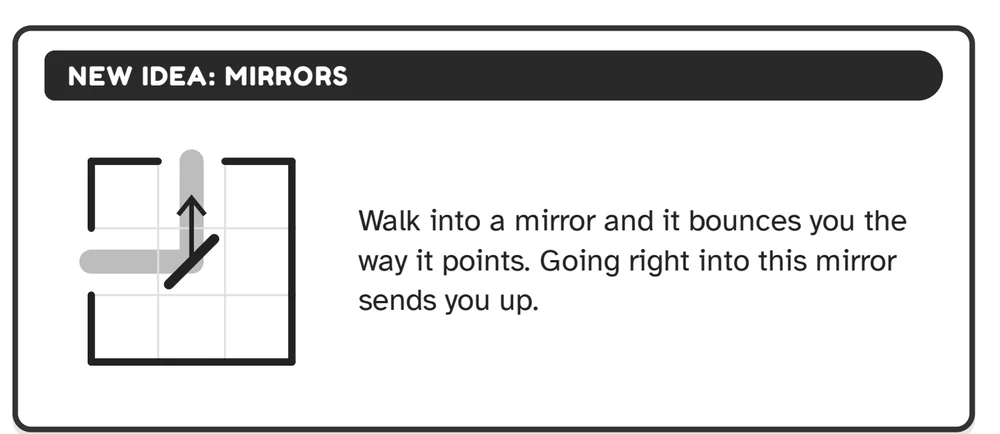
The mirrors are my favourite idea in the book. A mirror looks like a shortcut and often is one, but it picks your direction for you, and a mirror that bounces you into a wall is a dead end you can't see until you try it. The tip printed on one of the Quest 4 mazes says it plainly: "before you step into a mirror, point your finger the way it bounces. Is that way open?"
One rule holds all of it together: never use the same square twice. It stops a child from wandering in circles, and it gives the portals their bite, because each portal can carry you only once.
One new idea at a time
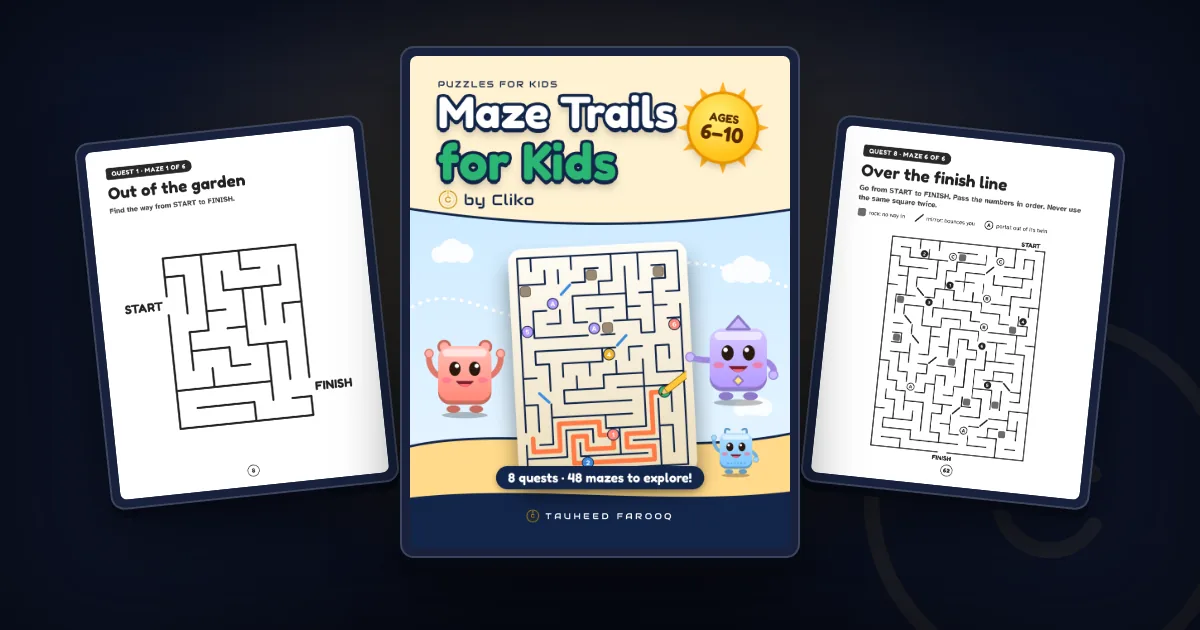
The book has eight quests of six mazes, led by three cube buddies, Pip, Bo and Zuzu. Each quest is a short story, from chasing a lost kite and flying a rocket to the Moon to tea with a friendly dragon, a dive under the sea and the big race at the end. The ideas arrive in order:
- Quest 1: plain mazes, starting at 7 by 9 squares.
- Quest 2: numbers to pass in order.
- Quest 3: rocks that block the path.
- Quest 4: mirrors that send you in a new direction.
- Quest 5: portals that carry you across the maze.
- Quests 6 to 8: everything together, growing to 16 by 22 squares.
Each quest opens with a page that teaches its new idea with a small worked example, before the first maze that needs it, and a map of the quest's six stops. Sixteen tips are spread through the book, and the one I'd give any parent first is the oldest maze trick there is: stuck? Start at FINISH and find your way back to START. The answers are at the back, and a certificate waits at the end.
A sister book: Word Search for Kids
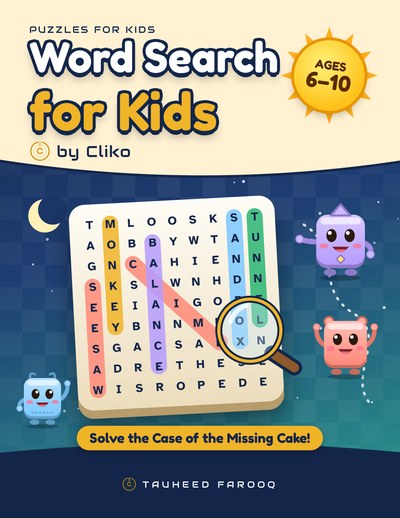
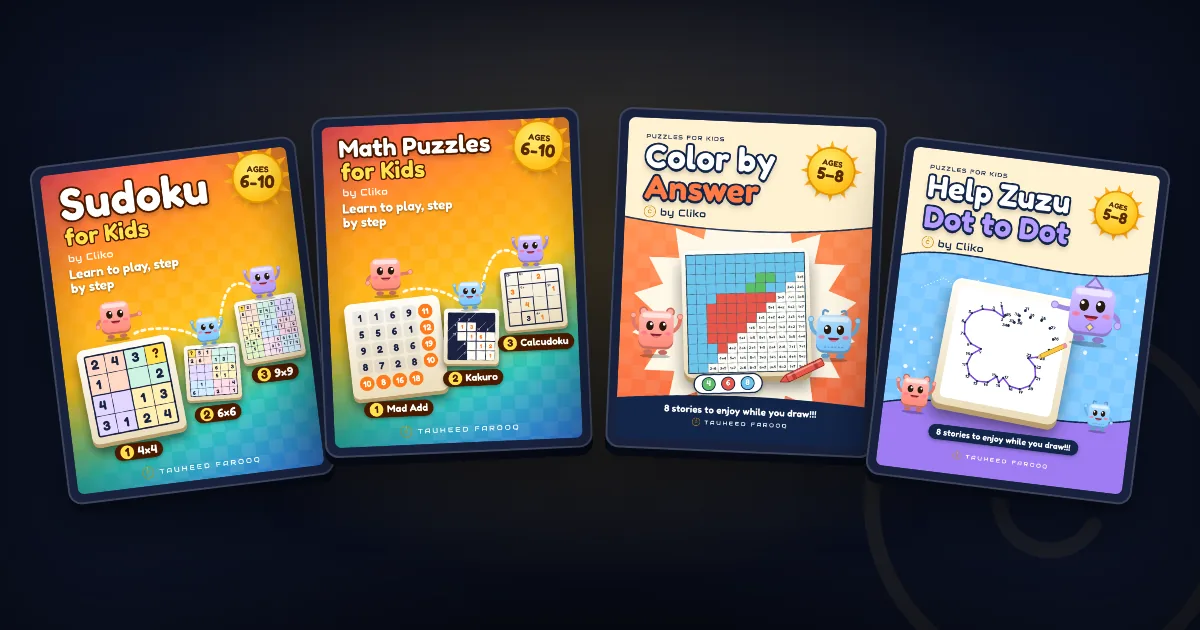
Maze Trails launches with a partner, Word Search for Kids by Cliko, subtitled The Case of the Missing Cake. It has 48 searches in eight chapters, and once a child has found every word, the letters left over spell a clue, and together the clues solve the case.
Both books are for ages 6 to 10, and both were checked the same way: every word appears exactly once, and every maze has exactly one way through.
Why a maze still belongs on paper
I build browser games, and Mirror Maze and Weave Zap are both free to play on this site. Still, a maze on paper does something a screen can't: a child can trace a route with a finger before committing to it, rub out a wrong turn, and come back to the same page tomorrow with nothing timing them. That pencil-and-eraser hour is what I want this book to give.
Where to find it
Maze Trails for Kids by Cliko and Word Search for Kids by Cliko are on Amazon, in the Puzzles for Kids by Cliko series under my pen name, Tauheed Farooq. When the mazes start to feel easy, the games they came from are free here, starting with Mirror Maze.