Puzzle Books for Kids: How We Made Four
A grown-up can tell a hard puzzle from a broken one. A seven-year-old can't, so a puzzle book for kids has to be right on every page.
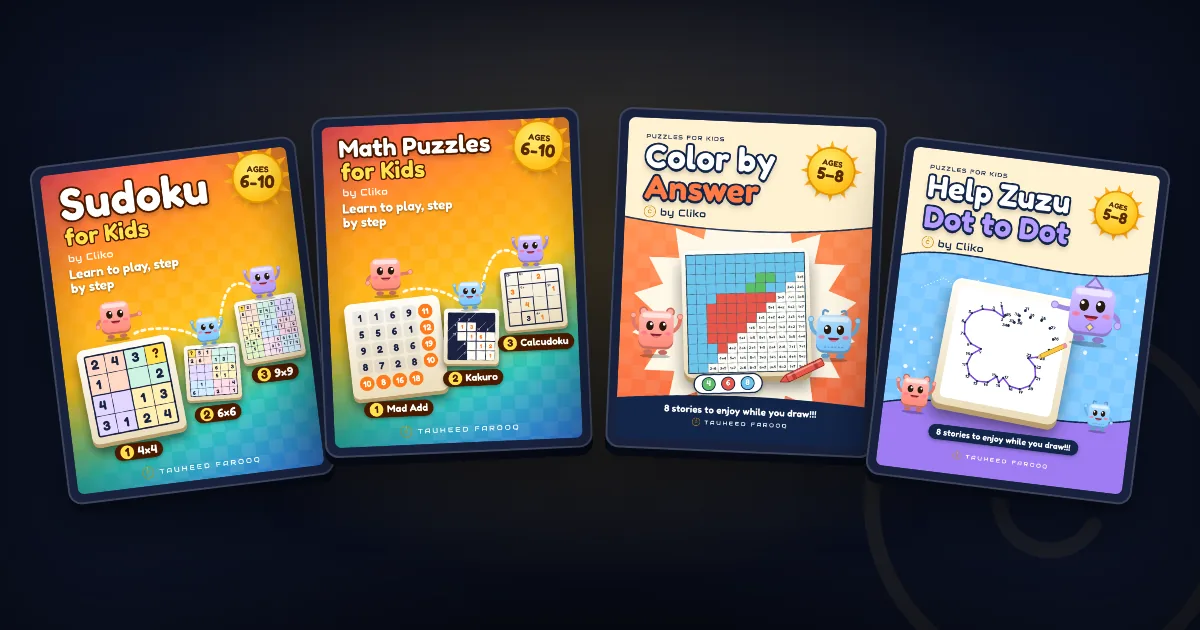
Puzzles came on paper
I grew up in Mysuru in the 1990s, and nobody I knew had the internet. Puzzles came on paper. I started with the sudoku in the newspaper, moved on to puzzle books, and only found puzzles online years later. Where I grew up, math puzzles were encouraged, not just tolerated, and a kid who liked them was never the odd one out.
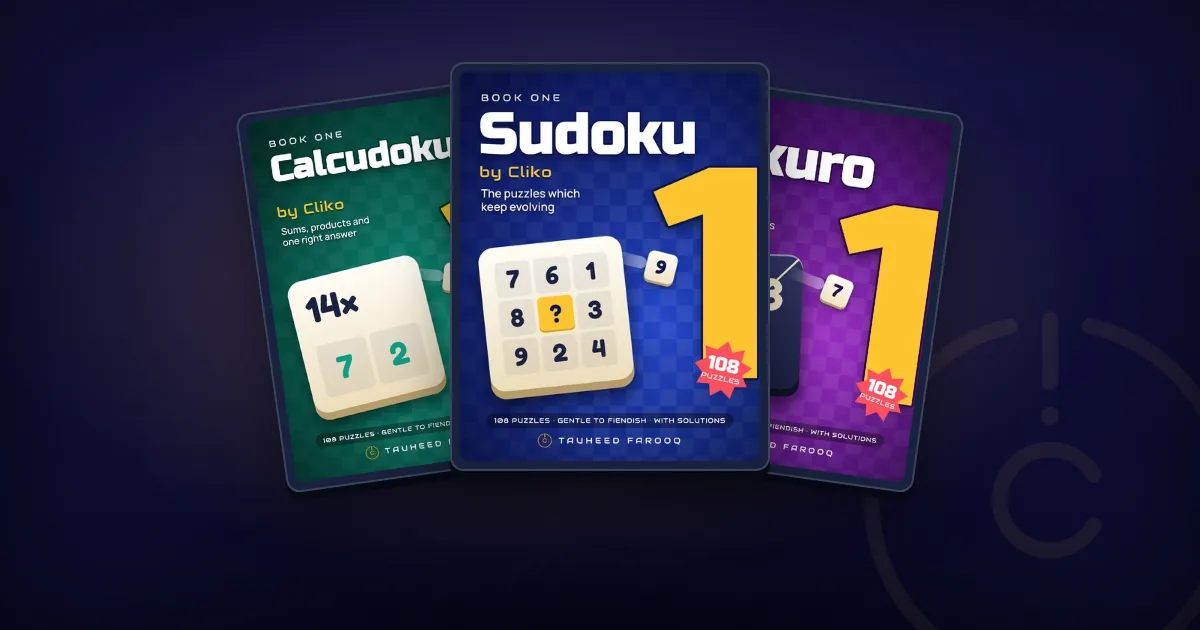
Cliko went the other way. It started as puzzle games in a browser, and last month our first grown-up puzzle books went to paper (I wrote about how we made those). The kids' books came next. I expected them to be the easy ones.
They weren't.
The one rule: every puzzle has to work
A grown-up who meets a broken puzzle gets annoyed, blames the book, and moves on.
But a child who meets one decides they are bad at puzzles. That's the worst lesson a puzzle book can teach, and it's why this rule matters to me more than anything else in these four books.
So every puzzle in all four was checked by computer before it went to print, which for the sudoku and the adding puzzles means exactly one answer, reachable by looking carefully and never by guessing, the same rule our online Variant Sudoku follows. In the colouring book it means every sum leads to the right colour, so the picture comes out right. In the dot-to-dot it means no number ever sits on top of a dot or a line, so a small hand never has to wonder which dot is 23.
Sudoku for Kids: from 4×4 to the real thing
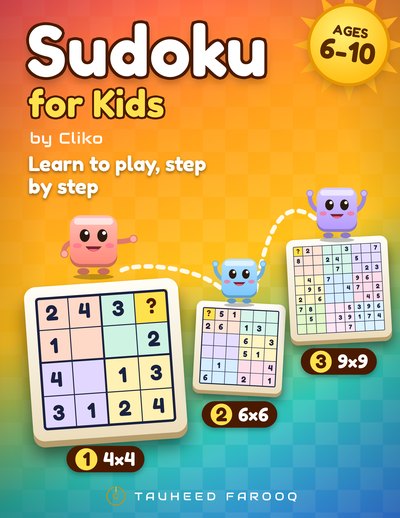
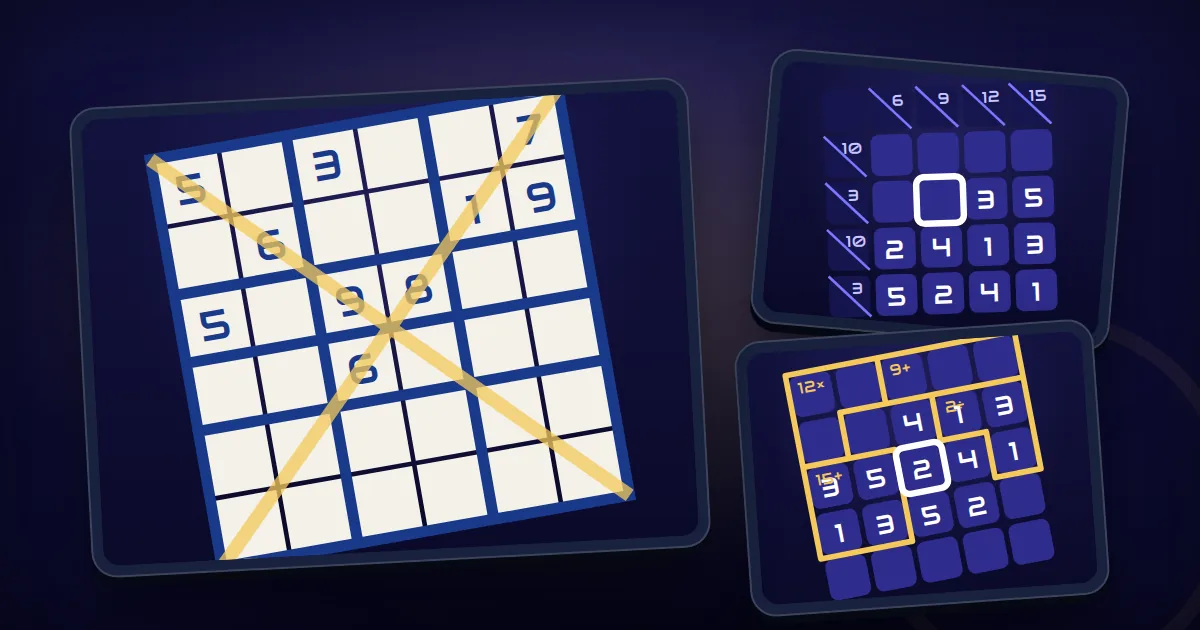
Sudoku for Kids by Cliko is for ages 6 to 10, and it teaches the puzzle in three sizes. Level 1 is sixteen tiny 4×4 grids with the numbers 1 to 4. Level 2 is twenty 6×6 grids. Level 3 is sixteen full 9×9 grids, the same kind grown-ups solve. That's 52 puzzles in all, in full colour, with nine picture lessons along the way.
The 4×4 start is the choice I'd defend hardest. With only four numbers there is almost nothing to hold in your head, so a child sees the whole idea of sudoku (every row, every column and every box holds each number once) and finishes a whole puzzle in one sitting. Then the grid grows, and so do they.
Three tile buddies, Pip, Bo and Zuzu, walk through the lessons: how to find a missing number, how to look across, down and in the box, and the "only one place" trick good solvers use. No maths is needed. Sudoku uses numbers as symbols, and nothing is ever added or taken away.
Math Puzzles for Kids: three games, one skill
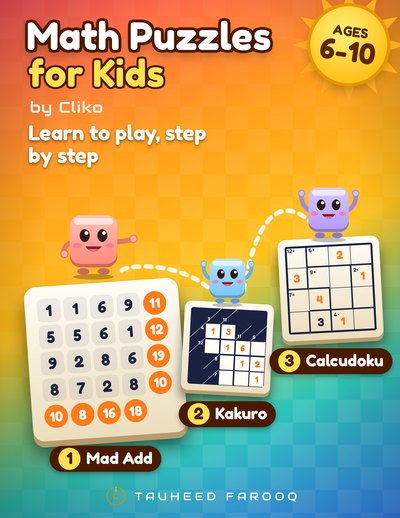
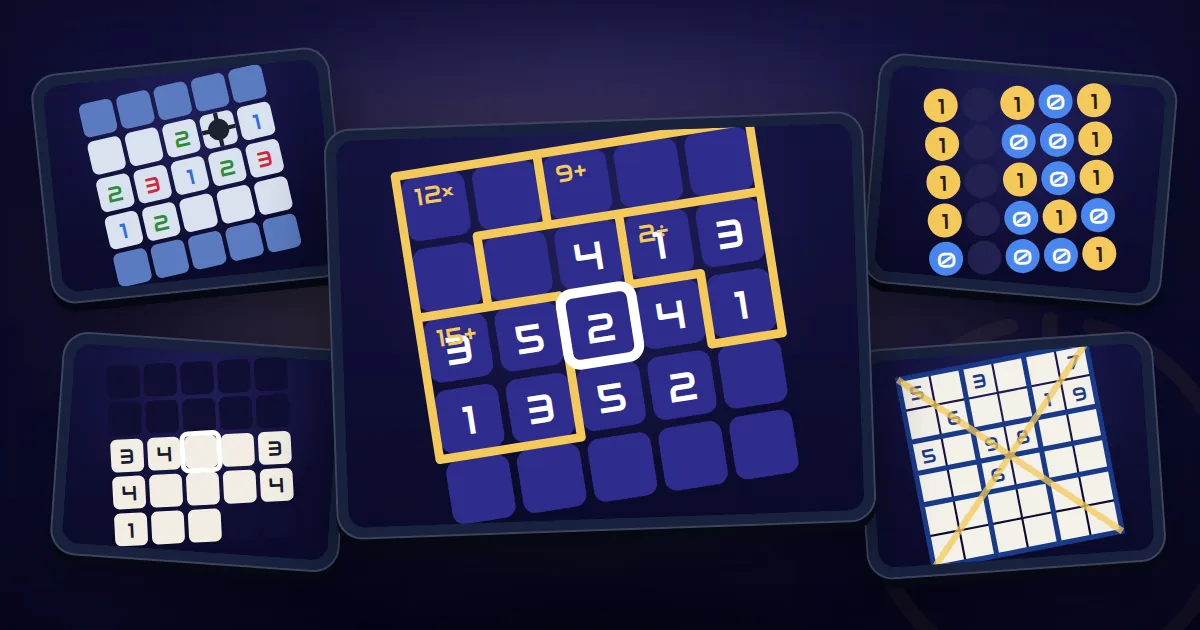
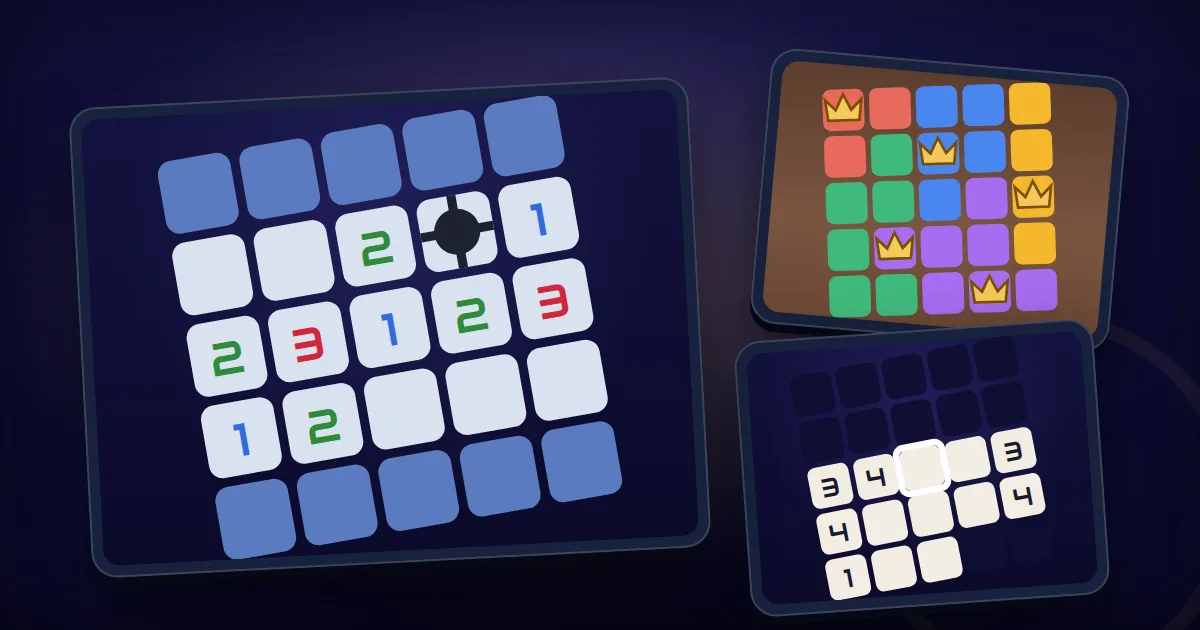
Math Puzzles for Kids by Cliko (ages 6 to 10) turns adding up into three puzzle games, and all three are games you can also play free on this site. Mad Add asks you to cross out the numbers you don't need, so every row and column hits its target. Kakuro is a crossword made of numbers.
The third is Calcudoku, the puzzle I found in a newspaper when I was seventeen. In the book it shrinks to a 4×4 square filled with 1, 2, 3 and 4, where every coloured cage adds up to its number, and the hard ones bring in a little times table. Each game gets twenty puzzles (eight easy, eight medium, four hard) and a picture lesson before it starts, and there is an adding-helpers page with the pairs that make ten, the doubles and a small times table.
Color by Answer: a sum in every square
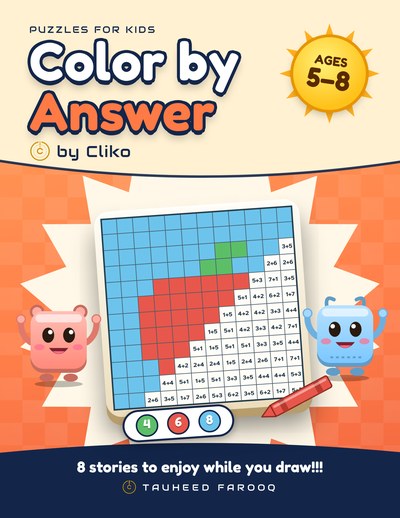
Color by Answer by Cliko is for ages 5 to 8. It's a colouring book with a puzzle hiding in every picture. Each square holds a little sum: solve it, find the answer in the colour key, colour the square, and square by square a picture appears.
The sums follow a story. Pip, Bo and Zuzu go on eight short adventures, from a morning on the farm and a toy parade to a bake sale, a night of camping and a cozy evening at home. Stories 1 to 4 are adding, with answers up to 10. Stories 5 to 8 add and take away, up to 20, and the grids grow from 12×12 to 14×14 to 16×16. Each story ends with a big scene to colour any way you like.
This one is printed in black and white on purpose (a colouring book printed in colour leaves the child nothing to do), with one picture per page. The back of every picture is a scratch page with a single line at the top, "Use Your Imagination!", and the rest left open for drawing, doodling, a story or a game. Help Zuzu Dot to Dot has the same scratch pages. Pencils and crayons work best there, so nothing shows through to the picture on the other side.
It's also where I caught a mistake of ours. On the first full proof, the page number sat right on top of the colour key, where a child could easily read it as one more answer. We moved it below the picture, and the program that builds the book now refuses any page where the number touches anything else.
Help Zuzu Dot to Dot: counting through a story
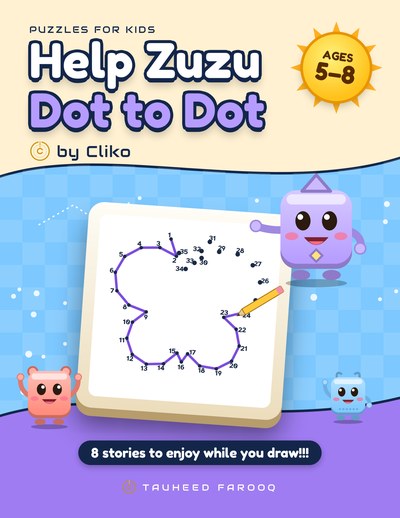
Help Zuzu Dot to Dot by Cliko (ages 5 to 8) is a story book you finish with a pencil. Start at dot 1, join the numbers in order, and find out what Zuzu found. There are eight stories again: a sandcastle, a kite, a garden, a rainy day walk, a trip to space, a birthday party, a fishing trip and a snow day.
The counting climbs with the stories. Every puzzle in the first story has 25 dots, each story adds five more, and the last one reaches 60. Dot 1 always wears a ring, because the hardest part of a dot-to-dot for a five-year-old isn't counting to 40. It's finding where to start.
Which book for which age
If you are choosing one, this is how I'd match them, using the ages printed on each cover:
- Ages 5 to 6: Help Zuzu Dot to Dot first, then the early stories of Color by Answer, where every sum stays at 10 or under.
- Ages 6 to 8: the later stories of Color by Answer, adding and taking away up to 20, or the 4×4 and 6×6 levels of Sudoku for Kids.
- Ages 8 to 10: the 9×9 grids in Sudoku for Kids, and Math Puzzles for Kids, whose hard Kakuro and Calcudoku pages will make a ten-year-old stop and think.
All four have the answers at the back and a certificate at the end, so a grown-up can help without solving the puzzle first.
The four books divide the age range between them. Color by Answer and Help Zuzu Dot to Dot begin at five, with counting and small sums carried along by a story, while Sudoku for Kids and Math Puzzles for Kids begin at six and teach real puzzle games through illustrated lessons, so a child who finishes one pair has an obvious next step. The last page of every book carries QR codes for the other Cliko books, which a grown-up can scan with a phone camera to open the Amazon page directly.
Why paper, from a studio that makes browser games
I build browser games for a living, so it's a fair question. My answer is that a page doesn't buzz, doesn't play the next thing on its own, and lets a child cross out a wrong number and try again without anything keeping score. Every puzzle I did as a kid was on paper, with nothing else competing for it. I wanted someone else's kid to get that same quiet hour.
Where to find them
Sudoku for Kids by Cliko, Math Puzzles for Kids by Cliko, Color by Answer by Cliko and Help Zuzu Dot to Dot by Cliko are all on Amazon now. All four belong to one series, Puzzles for Kids by Cliko, and carry my pen name, Tauheed Farooq.
And when a puzzle in the book starts to feel easy, the games behind it are free to play on this site, starting with Mad Add.